Wedding dresses
Satin, Chiffon, Tulle or Lace? A Wedding Dress Fabric Guide
See how shine, drape, layers and lining change a dress, and learn which fabric questions to ask before ordering.
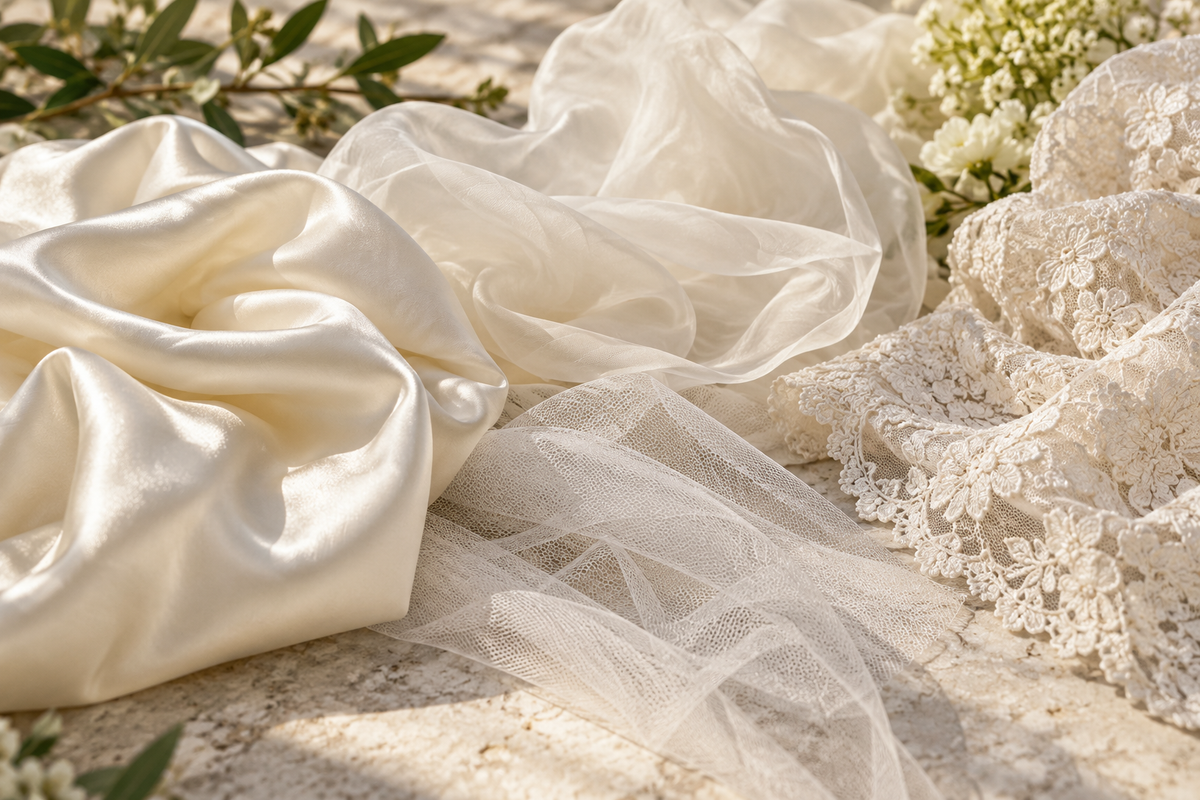
Separate the fabric name from the finished dress
A smooth satin skirt and a floaty chiffon skirt can create very different versions of an A-line. Satin often emphasizes a clean fold and reflected light; chiffon usually creates a softer, more fluid edge. Those are useful starting points, but weight, fiber, lining and construction can change the result substantially.
Do not treat “satin” as a synonym for silk. Fabric names may describe a weave, a structure or a decorative surface. If the fiber content matters to your decision, ask for the details of that specific style. The same applies to stretch: a dress that looks fluid is not necessarily elastic.
Read the comparison with the lining in mind
| Fabric or detail | Typical visual effect | Question to ask |
|---|---|---|
| Satin | Smooth surface with a visible sheen | How substantial is it, and what supports the skirt? |
| Chiffon | Light, soft drape, often layered | Is the skirt lined and how many layers are there? |
| Tulle | Sheer net that can build volume | Is the net soft or structured, and what touches the skin? |
| Lace | Pattern and texture over skin or lining | Which areas are lined and which remain sheer? |
A light outer fabric does not guarantee a light dress. Several layers of tulle, a substantial lining and embellishment may add weight. Likewise, lace on an unlined sleeve behaves differently from lace applied to a supported bodice. Ask about the area you care about, not just the fabric name.


Ada product examples illustrate visible design details. Check the selected product for current options, construction and sizing.
Match the finish to the setting
For bright outdoor light, consider how much shine you want in photographs. For a windy location, think about loose layers and the hem rather than assuming every airy fabric will be easy to manage. For a venue with rough stone or timber, plan how to keep fine net and delicate lace away from snagging surfaces.
Ada style 746804 illustrates a more structured satin skirt with lace sleeves, while 746814 shows layered chiffon with a softer outline. Compare the folds and the edge of the skirt. These photographs illustrate the visible finish; they do not establish weight, opacity in every light or the feel of the fabric.
Ask these questions before deciding
- What is the stated fiber content of the shell and lining?
- Which parts are sheer, including sleeves, upper bodice and back?
- Does the chosen color use a contrasting lining?
- Are embellishments sewn onto an outer layer that may need specialist alteration?
- What care instructions will be supplied?
Compare color in context. Screens, lighting and photography affect how ivory, champagne and sage appear. If a physical sample is essential, ask whether one is available; do not assume the store offers it. Keep the approved product description and your correspondence for reference.
Finally, choose the care plan alongside the dress. A richly textured hem may require more specialist attention after an outdoor event than a plain one. Follow the supplied label and obtain advice before applying steam, heat or cleaning products. The color and fabric guide and dress care page are useful next steps.
Common questions
Is chiffon always cooler than satin?
No. Fiber, lining, layers, fit and weather all affect comfort. Assess the whole dress rather than choosing by fabric name alone.
Can a photograph prove a dress is opaque?
No. Ask about lining and sheer areas, and check the dress in suitable light when it arrives before removing tags or altering it.